













Growth doesn’t slow down because your product stops being good. It slows down because the story around it never gets tight enough to support buying decisions. The common thread is almost always the same. Positioning is blurred. Messaging tries to please too many audiences. Everyone internally “gets it,” but buyers don’t.
Nearly 80% of B2B product launches miss their revenue targets, and the main cause is weak go-to-market strategy, not product quality or budget.
This is where most in-house teams hit friction. Everyone’s doing their job, but no one owns the full narrative end to end.
At this point, more content or more ads won’t fix anything. What actually makes a difference is clarity. Product marketing agencies add a layer that forces that clarity, pressure-tests assumptions, and brings an outside view buyers actually respond to.
But the right partner matters. The wrong agency adds noise. The right one forces sharper thinking, aligns teams, and makes growth feel lighter.
We have looked into the best product marketing agencies out there, breaking down what each one is good at and what a real partnership looks like, so it’s easier to find the teams that know how to make a product just click.
Verified and updated on 11th September,2026.
Epic Slope: Full-service marketing agency focused on B2B SaaS and AI companies. Best for building strong organic growth foundations and product-led SEO.
Fluvio: Specialist product marketing consultancy that works mainly with B2B SaaS companies on positioning, messaging, and go-to-market strategy.
Rampkit: Product marketing agency focused on B2B SaaS companies, helping teams with positioning-led content, messaging, and sales enablement assets.
Ninja Promo: Full-service digital marketing agency with strong emphasis on SaaS, fintech, and crypto. Covers everything from branding to paid media and product launches.
Kalungi: Fractional CMO and growth agency built specifically for B2B SaaS startups and scale-ups.
Olivine: Product marketing firm focused on high-growth SaaS companies, especially those needing positioning and messaging clarity.
Aventi Group: B2B marketing consultancy serving technology and professional services companies with strategy, branding, and demand generation.
Tomorrow People: Inbound-focused growth agency working mainly with B2B tech and SaaS companies.
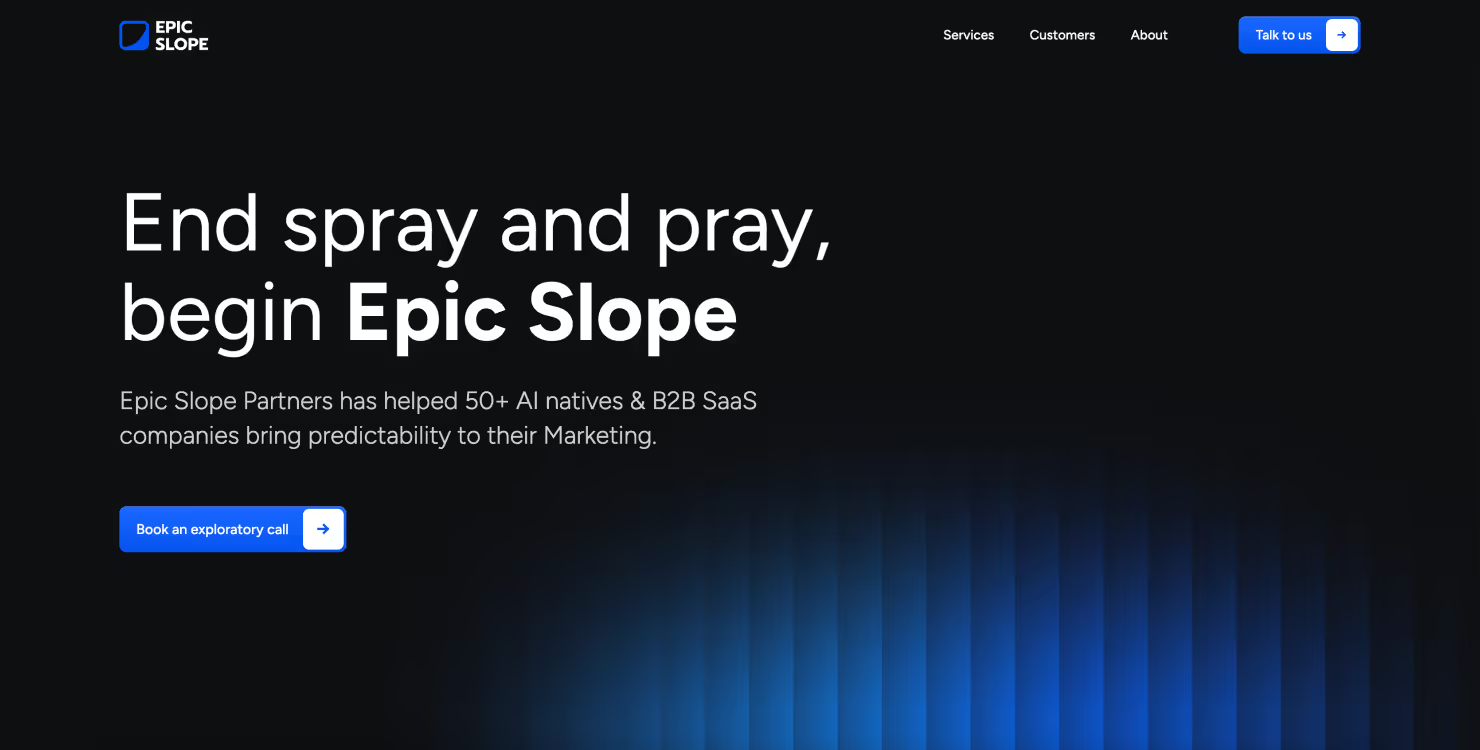
Epic Slope is a full-service growth partner for B2B SaaS and AI companies, focused on improving product visibility, messaging, and conversion across digital channels.
It’s led by senior marketers with a combined 42 years of experience in B2B SaaS, grounded in what’s worked across real launches. The approach fits into how teams already operate, without adding layers of process that slow things down.
"Epic Slope Partners were with us from the beginning, and we collaborated for nearly 1.5 years. I'd recommend them to any SaaS company looking to kickstart and scale their SEO and SEM efforts."
- Co-founder, GoldCast
You can book a quick free strategy call and see where you stand and the team will take it from there!

Fluvio positions itself as a product marketing consultancy that partners with internal teams to build and scale the discipline itself. Their services revolve around a proprietary go-to-market model. Also, they build internal capability and help you hire and train the next generation of product marketers guided by their GTM frameworks.
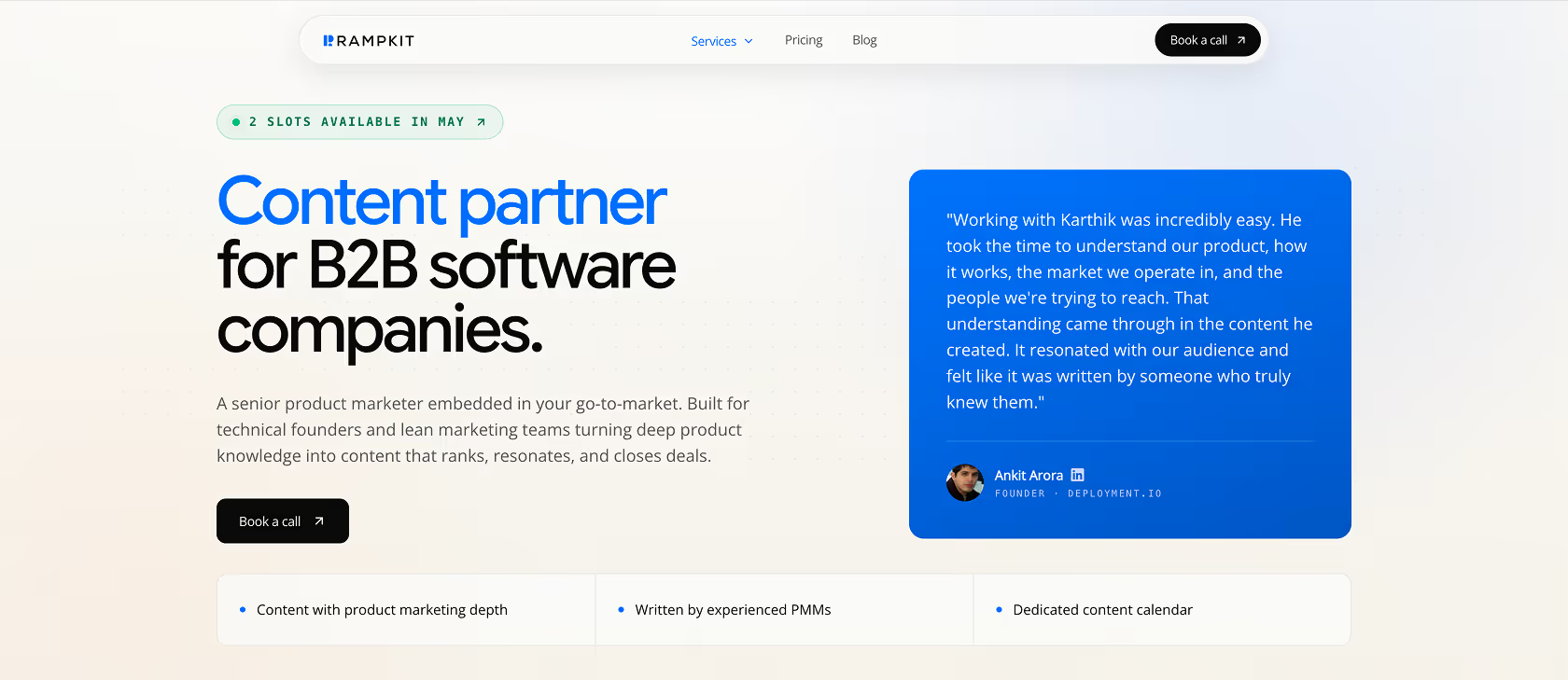
Rampkit is a product marketing agency built for B2B software companies that need sharper content, clearer messaging, and sales assets that actually support buying decisions.
Unlike generic content shops, Rampkit approaches content through a product marketing lens. Every asset is grounded in positioning, buyer context, competitive narrative, and the customer journey. This makes it a good fit for early-stage and growth-stage SaaS teams that have a strong product but need help turning that product story into blog content, website copy, thought leadership, and sales enablement material.
Rampkit is led by Karthik Pasupathy, who brings 10 years of in-house product marketing and content experience across companies like Zoho, Freshworks, Level AI, Prudent AI, and Fyno.

Ninja Promo is less about deep strategic product positioning and more about executional velocity across the funnel. Their strength lies in bringing GTM strategy to life with tactical execution, especially useful when speed and multi-channel motion matter more than deep positioning work.

Kalungi’s model is all about being your outsourced marcom team and strategic partner with heavy product marketing built into a broader GTM engine. They don't treat product marketing as a deliverable point. It’s central to how they build and run your entire SaaS GTM engine, so messaging and acquisition are always in sync.

Olivine’s follows a well-structured, pure product marketing practice that's focused on aligning product value with buyer behavior and GTM execution. Their services are classic, best-practice product marketing that includes strategy, messaging, enablement, and launch support.

Aventi Group lists services that tie strategy, launch, content, and sales support. Their lineup covers the entire product marketing lifecycle with a bit of a bias toward execution, particularly sales enablement and campaign management that directly impacts pipeline.

Tomorrow People is an AI powered human led agency with a model that is all about operational alignment and speed. They combine strategic positioning with real-time market sensing and demand execution.
Now, choosing an agency at this stage is less about finding someone who “does product marketing” and more about finding a team that knows how product marketing fits into a real SaaS business.
Here are a few must haves:
Experience only matters if it matches your reality. A team that works mostly with enterprise won’t automatically understand early-stage chaos. Agencies that have seen similar buyers, deal sizes, and growth problems will spot issues faster and waste less time learning the basics.
The same applies to industry expertise. Say you’re a corporate travel and expense management platform, for example. Your agency needs to understand the market, the buyers, and the problems you’re solving. That context can make all the difference in how effectively they position and market your product.
Again, positioning is not about clever language. It’s about choosing one audience, one core problem, and one clear story. Strong agencies ground this work in customer conversations, sales calls, and competitive research. If the output sounds simple and repeatable, that’s a good sign. If it sounds creative but inconsistent, it probably won’t stick.
GTM is how the product enters actual buying conversations. See if they think about sequencing, internal alignment, and sales readiness before pushing anything live. Launches should not feel like marketing is taking the entire weight. They should be a coordinated, collaborative effort.
The real question is what changes after the work is done. Better pipeline. Higher conversion. Easier sales conversations. If success is defined only by deliverables, the work stays cosmetic.
If sales doesn’t use it, it doesn’t exist. Really. Good agencies build narratives that work in real calls. Pitch flows, objections, and competitive framing matter more than brand language.
Process matters. So does communication. The best partners feel easy to work with. Clear feedback, fast loops, simple collaboration. If working together feels heavy, everything else will too.
Talk to a few agencies and pay attention to how they ask questions. If the conversation jumps straight into solutions, be cautious. If most of the time is spent understanding your product, buyers, and current problems, that’s usually a better signal than any case study. The right partner makes the problem feel clearer before they try to solve it.
At the end of the day, product marketing is only as good as what actually reaches the customer. Positioning that sounds great internally but falls flat in sales calls, launches that look polished but don’t drive adoption, and messaging that no one remembers are all signs that something is off.
And, what usually makes the biggest difference is not the checklist. It is the conversations.
Talk to a few agencies you like. Spend time understanding how they think. Ask them how they work, what their process looks like, and what they actually do once the contract is signed. The way they explain their approach will tell you more than any deck or case study.
If those conversations leave you feeling clearer about your own problems, that is already a good sign. If you come out more confused than before, something is probably off.
And if you are not sure where to start, maybe you could have a quick chat with Epic Slope. Not a sales pitch, but to see what a good strategy would look like for your marketing efforts.
The real job is to remove confusion from how the product is positioned and sold. That usually means tightening the core narrative, aligning sales and marketing, and making sure buyers understand the value without needing extra explanation.
Strategy alone rarely moves the needle. The value comes when the same team helps build the actual assets that carry the story, from positioning pages to sales decks and lifecycle flows. Epic Slope, for example, stays involved through execution so the strategy doesn’t get diluted once it hits your team.
Internal alignment usually improves quickly, often within the first few weeks. External impact, like better conversion or smoother sales conversations, shows up as soon as the new narrative is live and being used across touchpoints.
Look at how they think, not what they pitch. Strong agencies spend most of the conversation trying to understand your buyers, deals, and current confusion. If the first call already makes your problem clearer, that’s a better signal than any case study.